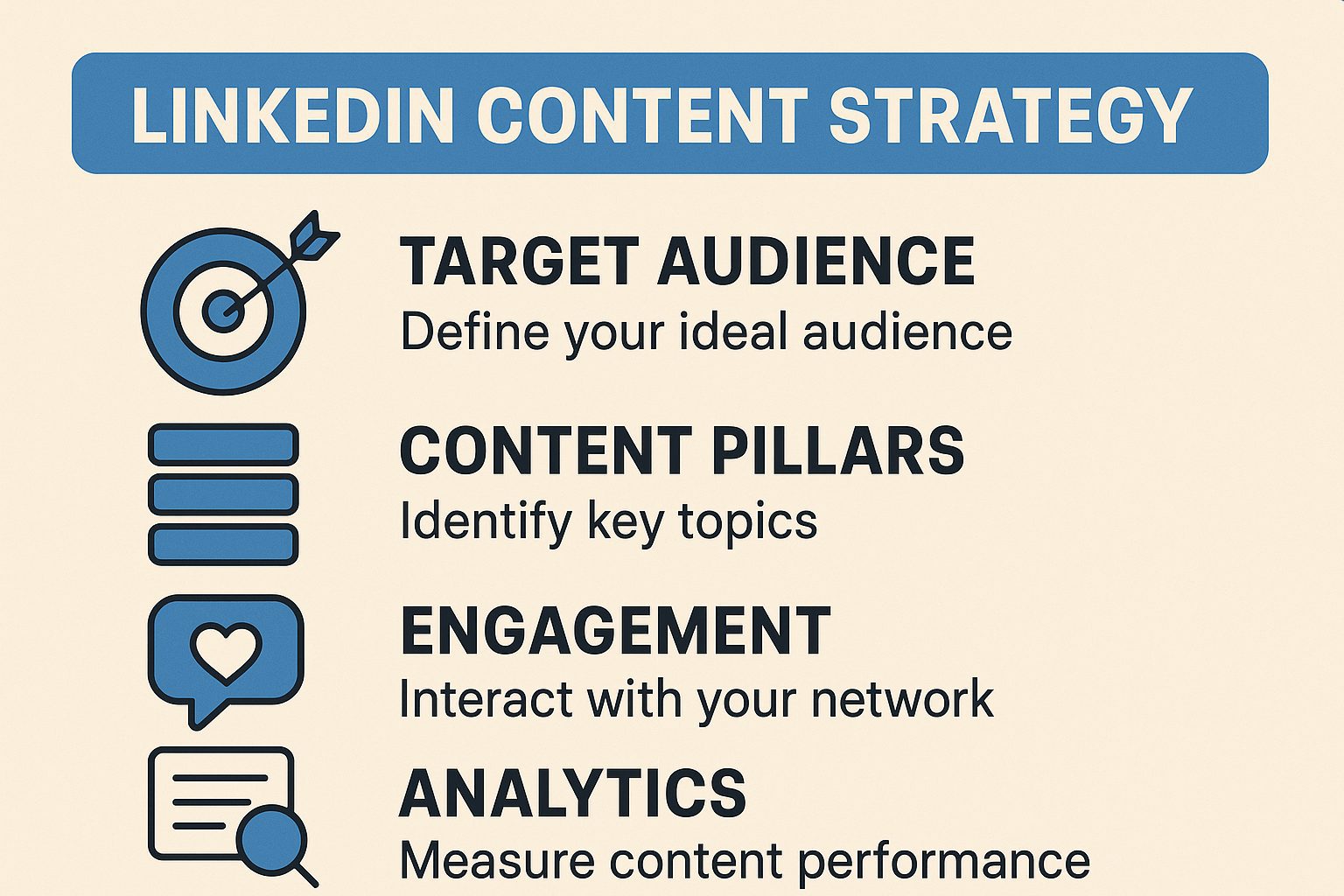
Building a strong LinkedIn content strategy isn’t just about being active — it’s about being intentional. With over 1 billion members globally, LinkedIn has evolved into a powerful platform for establishing thought leadership, attracting clients, and driving brand visibility. However, to stand out among professionals, you need a smart, data-driven approach to your content. In this guide, I’ll walk you through how to understand your audience, plan a content calendar, craft engaging posts, and measure what truly drives success. From my personal experience managing corporate and personal LinkedIn profiles, these strategies can help you convert connections into meaningful opportunities.
Understand Your LinkedIn Audience and Goals
Before you start creating posts, take time to define who your LinkedIn audience really is. Your audience includes potential clients, industry peers, recruiters, or even employees you want to attract. Use LinkedIn analytics to see which industries, job titles, and locations your followers come from. This insight helps shape your content tone and topics in a way that feels personal and relevant to your viewers.
Another critical step is setting clear goals. Ask yourself what you want to achieve: Is it brand awareness, lead generation, or thought leadership?
Knowing your audience also requires active engagement — listen to what your followers comment on and share. Pay attention to recurring questions or feedback themes. I often use LinkedIn polls to gauge interest in topics before writing full articles. This data-first approach keeps your content focused on what your audience actually wants rather than what you assume they want.
Lastly, consider your brand persona. Are you positioning yourself as a mentor, industry expert, or creative innovator? Maintaining a consistent voice helps you build authenticity and trust. The most successful LinkedIn creators aren’t simply consistent; they are consistent with purpose.
Plan a Consistent LinkedIn Content Calendar
Once you understand your audience, it’s time to build a LinkedIn content calendar. Consistency is key — not just in frequency, but in timing and topic relevance. Creating a monthly plan helped me stay disciplined and strategic about what I shared.
A strong LinkedIn content calendar includes different content types: articles, short posts, carousels, and videos. Mix thought leadership with practical tips and behind-the-scenes insights.
Tools like Trello, Notion, or Google Sheets can help you organize posts effectively. I like to add columns for topic, post type, hashtags, and target keywords. This not only sparks creativity but also provides structure to track what works best. You can even use AI tools for ideation and tagging, ensuring your content aligns with trending keywords like LinkedIn engagement strategy or social media optimization for professionals.
Finally, keep flexibility in mind. While planning is essential, always allow room for spontaneous posts responding to current events or industry news. Timely insights often perform better because they show you’re in tune with your field. Strike a balance between structure and adaptability.
Create Engaging LinkedIn Posts That Convert
Creating posts that convert means writing with both connection and conversion in mind. The first three lines matter most — they appear before the “see more” cutoff, so use them wisely. Start with a strong hook like an industry challenge or bold statement.
Authenticity remains your best marketing asset. Share real experiences, case studies, or lessons learned — not just curated facts. Once, I shared a post about a project that failed and what I learned from it. Surprisingly, it performed better than overly polished success stories, proving that vulnerability builds trust.
Incorporate visuals and LinkedIn-native features. Posts with infographics or videos tend to see 2-3 times more engagement. Use clear formatting — short paragraphs, bullet points, and spacing — to make your posts easier to read. Visual scannability is a subtle SEO tactic within LinkedIn’s ecosystem.
Finally, optimize your calls-to-action (CTAs). Whether it’s “Join the conversation,” “Share your thoughts,” or “Download my free guide,” make your CTA action-oriented. Conversion on LinkedIn doesn’t always mean sales — often, it’s about starting meaningful conversations that lead to business later.
Measure and Improve Your LinkedIn Strategy Results
What gets measured, improves. LinkedIn offers robust analytics for personal profiles and company pages. Track metrics like impressions, engagement rate, click-through rate (CTR), and follower growth. For example, I once noticed my posts had high reach but low engagement — indicating that while my content was being seen, it wasn’t resonating. Adjusting tone and adding questions at the end of posts significantly improved comment rates.
Use these analytics to identify what types of content perform best. If video posts consistently outperform links, allocate more effort to video production. Optimization is not just about quantity; it’s about amplifying what works. I often create a “content scorecard” every month, ranking my posts from best to worst. This helps refine next month’s calendar with more precision.
Feedback loops are also vital. Listen to audience responses and measure sentiment. When people engage positively with a particular topic, double down on it. If you’re unsure what data to prioritize, focus on engagement rate per impression — it’s one of the most accurate indicators of genuine content resonance on LinkedIn.
Lastly, don’t forget A/B testing. Try different posting times, hook styles, or hashtag combinations. LinkedIn’s algorithm rewards experimentation. Over a few months, these small changes compound into significant audience and brand growth.
Q & A
Q: How often should I post on LinkedIn?
A: Ideally, post 3–5 times a week to stay consistent without overwhelming your audience. Frequency depends on your niche and engagement trends.
Q: Should I use hashtags on LinkedIn?
A: Yes, but use them strategically. Stick to 3–5 relevant hashtags like #LinkedInMarketing, #ContentStrategy, or #PersonalBranding. Avoid keyword stuffing.
Q: Is it better to post from a company page or a personal profile?
A: Both matter. Use your personal profile for building trust and connection, and your company page for credibility and brand authority.
A thriving LinkedIn content strategy doesn’t happen overnight — it comes from understanding your audience, planning strategically, and refining based on data. Treat LinkedIn as a community, not just a broadcasting platform. The professionals who win on LinkedIn are those who listen, engage, and adapt. Start with small, consistent actions today, and you’ll see your influence and opportunities grow over time.
Leave a Reply