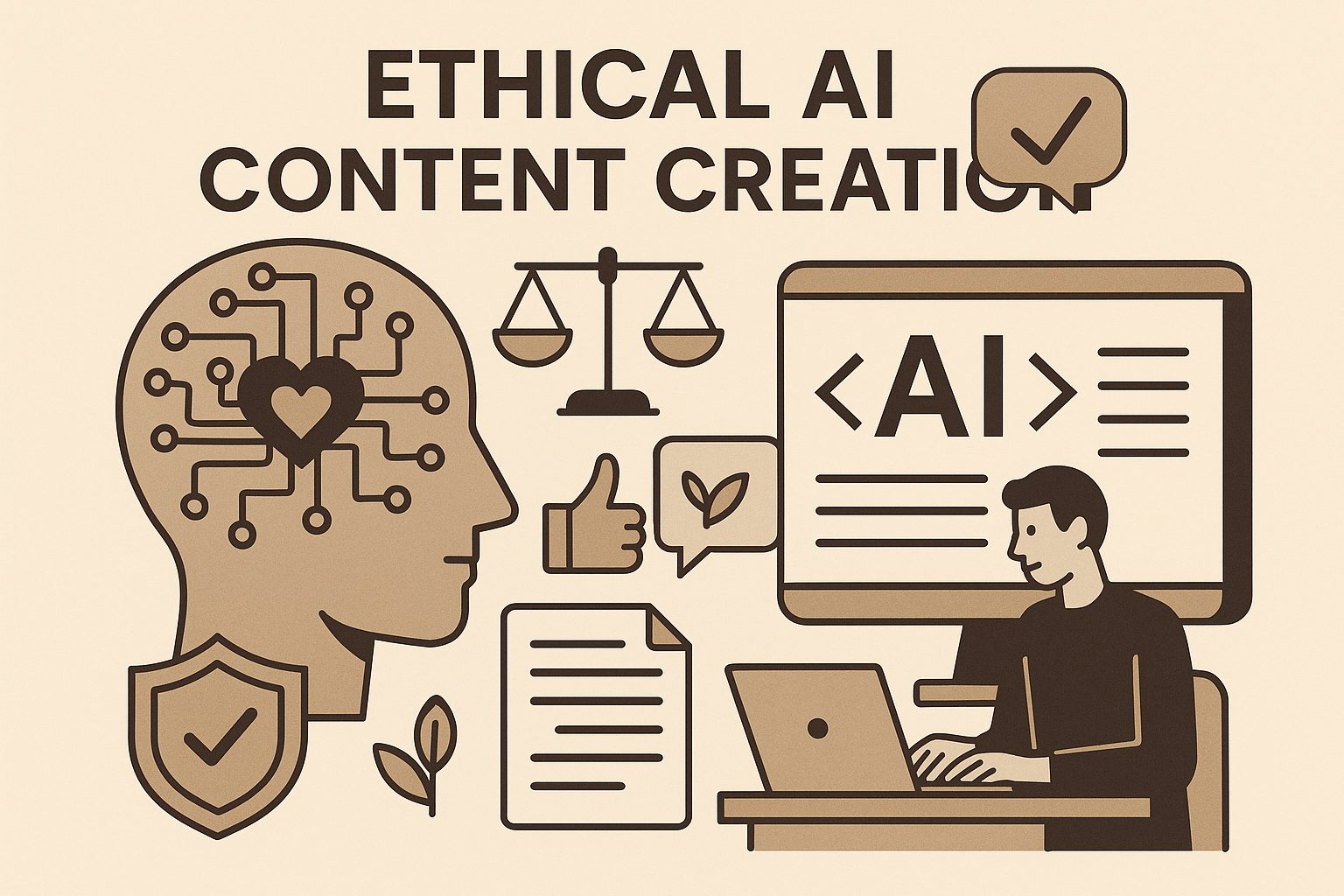
In today’s digital marketing landscape, artificial intelligence (AI) is transforming the way we create content, optimize SEO strategies, and engage with audiences. However, as with any tool, using AI responsibly and ethically is key to long-term success. The idea of ethical AI content creation isn’t just a buzzword — it’s a guiding principle for building trust, credibility, and sustainable growth.
Ethical AI refers to the intentional and transparent use of AI tools while respecting copyright laws, data privacy, and factual accuracy. In the context of content creation, it means producing high-quality materials that are free of misinformation, plagiarism, or bias. AI can assist in generating blog outlines, suggesting keywords, or rephrasing ideas — but it must always serve human creativity, not replace it.
From my personal experience, I learned that blindly trusting AI outputs can backfire. Once, an AI-generated blog post included outdated statistics that negatively impacted the client’s credibility. This incident taught me the importance of reviewing and editing AI-generated content before publishing. Ethical use, therefore, requires oversight and human judgment every step of the way.
Transparency is another essential aspect. Audiences deserve to know whether the content they’re consuming is partially AI-generated. Labeling such content helps maintain honesty and fosters a deeper connection with readers. It’s also an important ranking factor in search engines, as Google prioritizes content that demonstrates experience, expertise, authoritativeness, and trustworthiness (EEAT).
In essence, understanding ethical AI means recognizing that AI should be a supporting actor, not the star of your creative process. It works best when it amplifies your message and enhances productivity while staying true to your brand’s voice and values. This balanced approach not only strengthens your SEO strategy but also ensures that your audience continues to trust your content.
Why Responsible AI Matters for Creators
Ethical content creation isn’t just about doing the right thing; it also affects long-term brand reputation and SEO performance. Google’s continuous algorithm updates focus heavily on authentic, valuable, and human-centric content. Using AI irresponsibly — such as generating clickbait or plagiarized articles — can lead to penalties or lower rankings.
Responsible AI also ensures fairness and inclusivity. Creators should be aware that AI models can unintentionally reflect biased data. To maintain ethical integrity, always fact-check, add your personal insights, and use inclusive language. In my experience, blending AI efficiency with human empathy always delivers superior results.
When used correctly, AI can empower creators to focus on strategy, storytelling, and creativity rather than repetitive tasks. For instance, I use AI tools to generate initial keyword ideas or to reformat rough drafts — but I never let the tool dictate my tone or structure. This hybrid method keeps the content authentic and search-friendly.
Moreover, responsible AI use supports sustainability. Overproduced, low-quality AI content clogs the internet and diminishes audience trust. Quality-driven creators who use AI responsibly stand out as thought leaders, not content farmers. This distinction is becoming more critical as audiences are increasingly aware of AI-generated material.
In a broader sense, being responsible with AI positions you as a forward-thinking professional who values ethics as much as innovation. That combination is becoming a major differentiator in content marketing, influencing not only SEO performance but also brand partnerships and customer loyalty.
Best Practices for Ethical AI Content Writing
To use AI ethically in content creation, you need clear boundaries and repeatable practices. The first guideline is human oversight. Always review, edit, and refine anything generated by AI. Tools like ChatGPT can help brainstorm, but your voice and expertise must shine through in the final version.
Another best practice is transparency. If AI assisted you in content development, disclose it when appropriate, especially in professional or research-based material. This builds credibility with readers and aligns with emerging content labeling standards.
Third, focus on data security and originality. Never input confidential or private information into AI systems, and always check outputs for plagiarism. I discovered early on that AI sometimes phrases common ideas identically across multiple sources — a potential SEO hazard if left unchecked.
Always infuse your unique perspective. Sharing real experiences, personal examples, or industry insights makes a piece stand out. AI can provide the structure, but your lived experience provides authenticity — which both audiences and algorithms favor.
Lastly, ensure your AI-generated content supports ethical SEO practices. Avoid keyword stuffing or manipulative link-building. Instead, use AI’s analytical capabilities to identify user intent and optimize content naturally for both readers and search engines.
By following these best practices, you can harness AI’s potential responsibly — amplifying creativity, not replacing it.
How to Build Trust with AI-Generated Content
Building trust is the cornerstone of ethical AI content creation. Readers must feel confident that the content they’re consuming is accurate, transparent, and genuinely useful. Begin by prioritizing credibility through reliable sourcing and fact-checking. When AI offers data or examples, verify them independently before including them.
Adding a human touch — such as anecdotes or opinions — also nurtures trust. In my experience, posts that include personal insights perform better in terms of engagement and time-on-page metrics. People crave authenticity, and AI can never replicate a creator’s lived experience or emotional intelligence.
Another trust-building element is consistency. Use AI tools to maintain tone, brand voice, and style across posts. Consistency reinforces brand reliability and helps search engines identify authority signals over time.
You can further enhance trust by being transparent about AI’s role in your process. For example, noting that an AI-assisted tool generated topic ideas or helped organize the structure adds honesty to your workflow. Readers and potential clients appreciate such clarity.
Finally, always keep accessibility and inclusivity in mind. Ensure AI-generated text is readable, unbiased, and considerate of diverse audiences. Ethical AI not only drives better SEO performance but also strengthens community trust and social responsibility.
Q&A: Common Questions About Ethical AI in Content Creation
Q: Can I let AI write entire posts for me?
A: You can, but it’s not advisable. Search engines prefer content that reflects real human experience and originality. Always review, refine, and add your personal perspective.
Q: How does ethical AI improve SEO?
A: Ethical AI strategies focus on quality, accuracy, and user intent — all important ranking factors that align with Google’s EEAT principles.
Q: Is disclosure of AI use necessary?
A: Transparency builds credibility. Disclosing AI use shows honesty and aligns with ethical marketing standards.
Ethical AI isn’t about restricting innovation — it’s about guiding it responsibly. When creators use AI tools with honesty and respect for their audience, they unlock powerful opportunities for authentic growth. By combining thoughtful strategy, transparent communication, and human emotion, you can transform AI from a productivity gadget into a lasting pillar of ethical, trustworthy content creation.
Leave a Reply